Feeding Futures

Local Food. Healthy Students. Stronger Communities.

Connecting the Dots: How CWK’s Social Enterprise Bridges Farm to Cafeteria

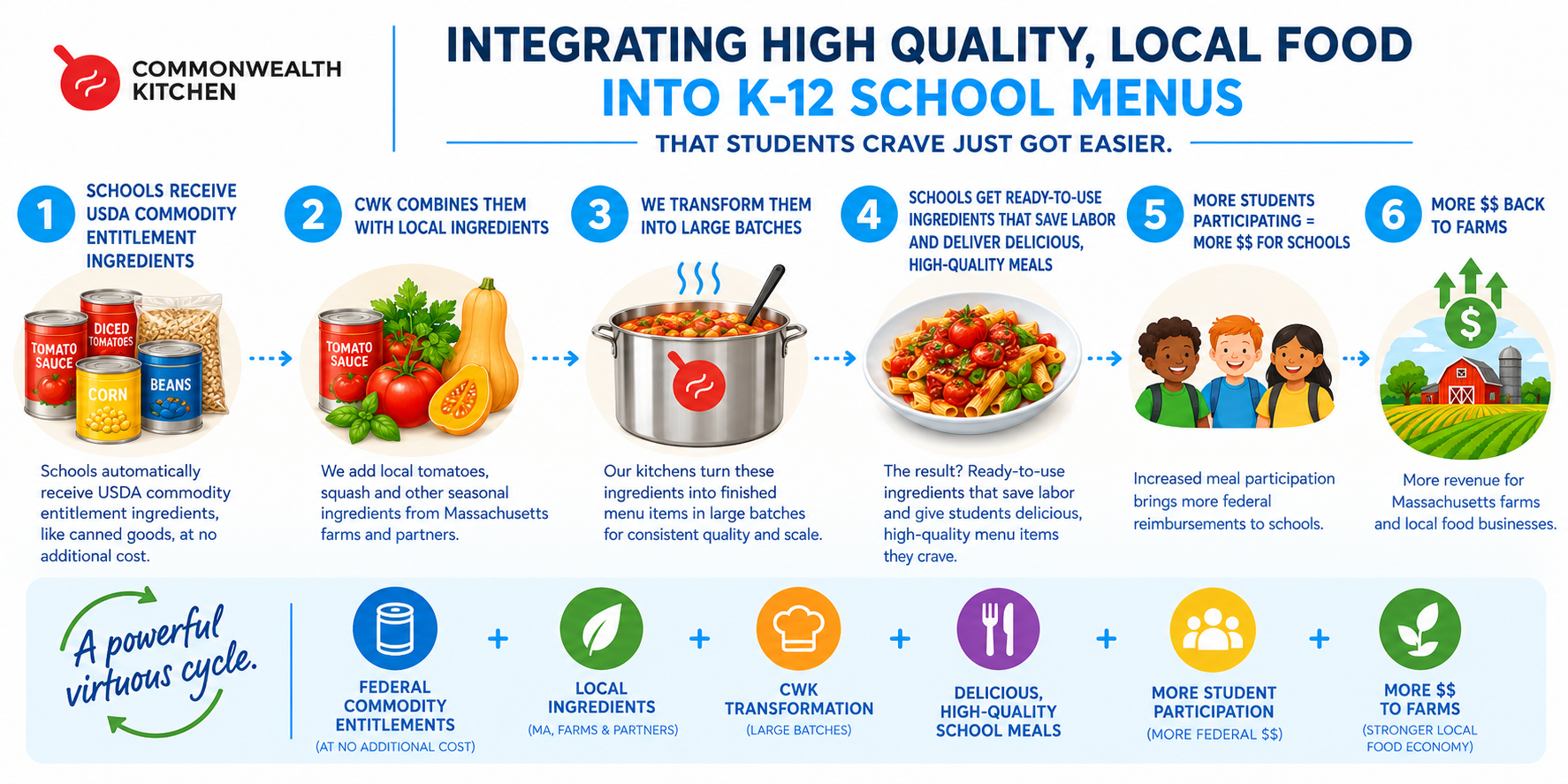
 CWK works with farms across New England to turn surplus, B-grade and underutilized crops into custom, ready-to-eat menu items for colleges, hospitals, K-12 schools, cafes and corporate catering menus. We’re leveraging our food manufacturing capacity to divert food waste, strengthen supply chains, improve climate resilience, create jobs, and bring more locally-made, minimally processed food to the market. 
🎒 WHY K-12 SCHOOLS?

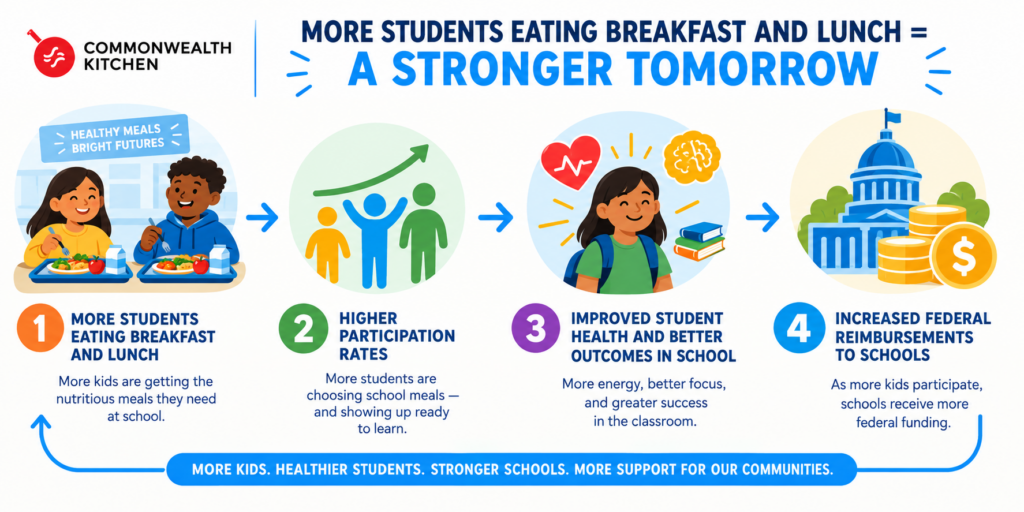
K-12 schools function as the largest restaurant chain in the United States, serving over 30 million meals every day. According to the CDC, school meals represent as much as 50% of a student’s daily nutritional intake.

Yet much of what lands on a student’s plate today is highly processed, pre-packaged, and sourced from industrial supply chains.

Low Participation Rates: The NIH estimates that fewer than 40% of income-eligible high schoolers and 50% of middle schoolers participate in free lunch programs—largely due to food quality.

The MA Landscape: In Massachusetts—one of nine states guaranteeing universal free school meals—participation averages 65% for lunch and 25% for breakfast.

Childhood Hunger: Feeding America estimates national child food insecurity at 20%, mirrored locally by Greater
Boston Food Bank data showing 37% of Massachusetts children are food insecure.

Optimizing the school cafeteria is one of the most powerful levers available to solve childhood hunger and improve long-term student health.

WHY SCHOOL FOOD MATTERS

  • Massive Scale: Serving over 30 million meals daily, K-12 schools function as the nation’s largest food service network.

  • Essential Nutrition: School meals provide over 50% of the daily calories kids consume.

  • Statewide Investment: In Massachusetts, taxpayers invest $180M+ annually to guarantee free breakfast and lunch to 900,000 students.

  • The Opportunity & Challenge: While school meals have gotten significantly better—offering fresh salad bars and diverse, culturally inclusive menus—preparing high-quality meals daily for nearly a million kids remains a massive challenge for under-equipped school kitchens.

Meeting District Needs with Custom Culinary Solutions School districts want creative, cost-effective ways to bring local and culturally diverse options to their menus. CWK provides the solution. We leverage our large-scale kitchen capacity to manufacture ready-to-use products—like veggie fritters, pesto, and custom sauces—that seamlessly complement in-house meal preparation and elevate school food programs.

Meeting District Needs with Custom Culinary Solutions

School districts want creative, cost-effective ways to bring local and culturally diverse options to their menus. CWK provides the solution. We leverage our large-scale kitchen capacity to manufacture ready-to-use products—like veggie fritters, pesto, and custom sauces—that seamlessly complement in-house meal preparation and elevate school food programs.

CWK is proving that these goals don’t have to compete with one another.

We can feed more kids healthy, local, delicious food – and make every dollar work harder. 

The Feeding Futures Initiative - Doing at at Scale

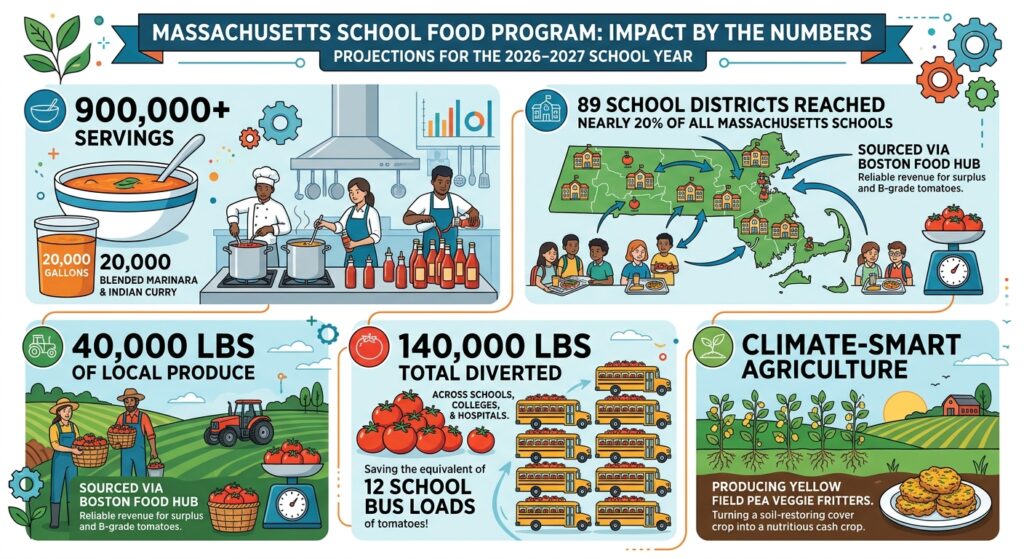
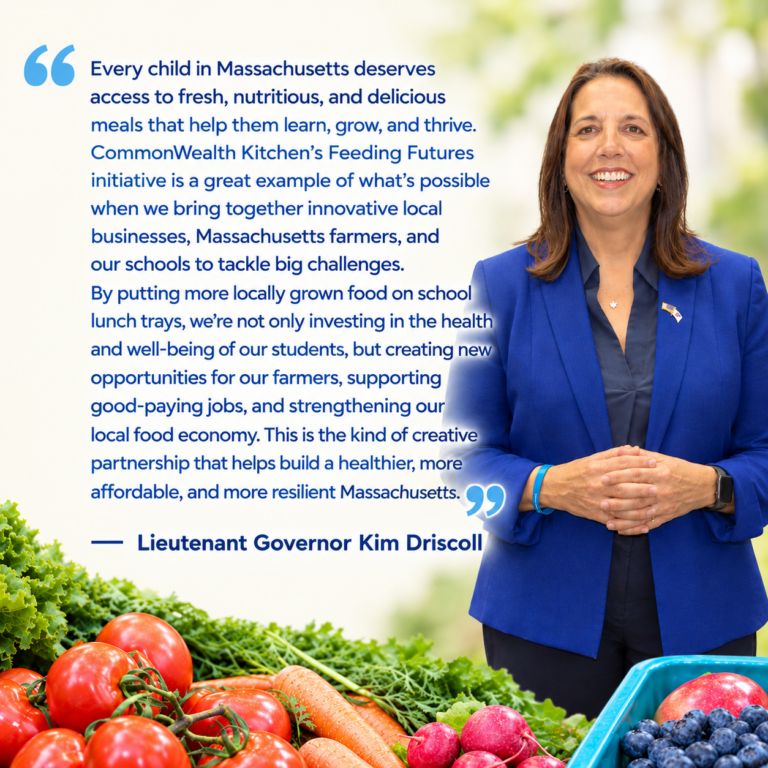
For the inaugural 2026–27 pilot year, CWK will produce two sauces for 89 school districts across Massachusetts—nearly 20% of all districts in the Commonwealth.

The pilot is the largest effort of its kind in New England, positioning Massachusetts as a national leader in connecting federal food programs with local agriculture and local food production!

“Every day, millions of kids eat breakfast and lunch at their school—and every meal is an opportunity to shape more than a child’s health and learning. School meals influence what farmers grow, how we steward the land, where public dollars go, and the food system we build for generations to come.”

Jen Faigel, CEO CommonWealth Kitchen

Special Thanks to Our Partners and Supporters